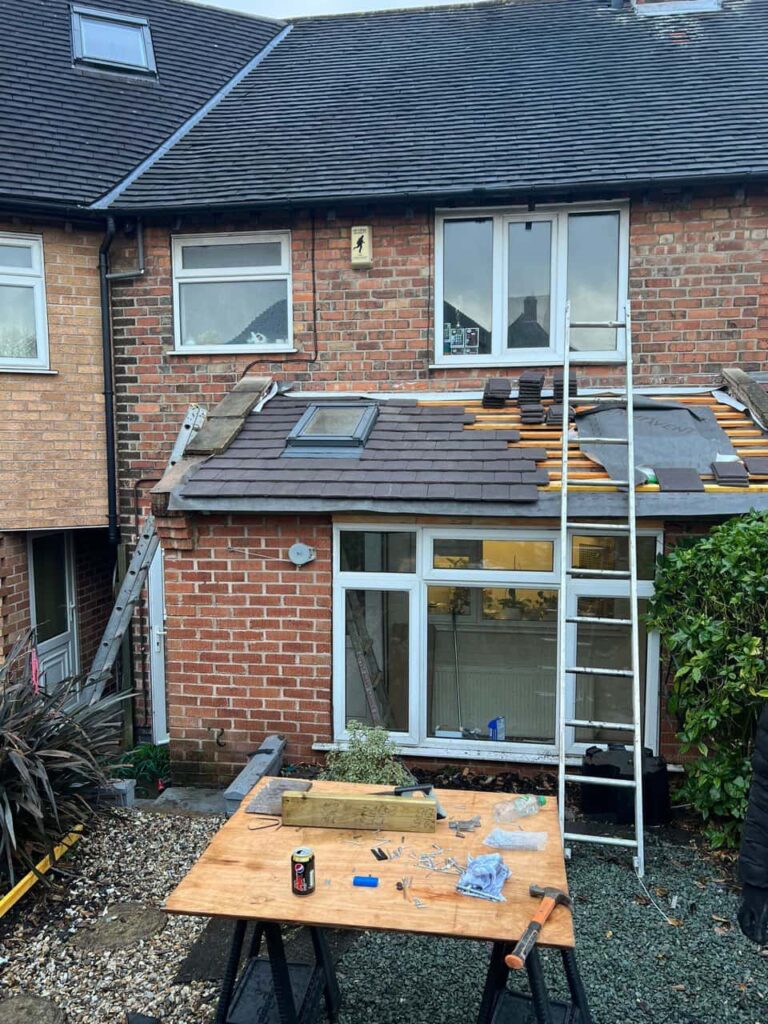
The place where water becomes visible inside a property is not always directly beneath the defect in the roof. Rainwater can travel along underlay, battens, rafters and other concealed surfaces before reaching a ceiling or wall. This is why repairing only the area above an internal damp patch may fail to resolve the problem.
A professional roofer uses the visible symptoms as a starting point, then traces the likely route of the water through the complete roofing system. For property owners in Petersfield, Hampshire, this methodical approach can lead to a more accurate diagnosis and a repair that addresses the actual source of the leak.
How Professional Roof Leak Detection Works
The Investigation Begins with the Internal Symptoms
The position, shape and condition of an internal mark can provide useful clues. A roofer may inspect the ceiling, walls and accessible roof space to determine how moisture is moving through the property.
Important observations can include:
- Whether the dampness appears after every rainfall
- Which rooms or roof slopes are affected
- Whether the mark is growing or changing position
- The direction of staining on timbers
- Damp insulation or underlay
- Signs of moisture around penetrations and junctions
- Previous repairs near the affected area
This information helps narrow the investigation before the external roof inspection begins.
Weather Patterns Help Identify the Cause
The circumstances in which a leak appears can reveal a great deal about its source. A problem that develops only during wind-driven rain may involve a different defect from one that occurs whenever water flows down the roof.
A roofer may ask whether the leak:
- Appears during heavy or prolonged rainfall
- Occurs only when rain comes from a particular direction
- Continues after the rainfall has stopped
- Becomes worse when gutters overflow
- Develops following strong winds
- Affects the same internal area each time
Matching the leak to particular weather conditions helps identify which roofing details are most likely to be involved.
The Roof Space Can Reveal the Water’s Route
Where access is available, the roof space is an important part of the inspection. Water can leave staining, damp patches or trails that indicate the direction from which it travelled.
The visible moisture may have entered higher up the roof before running down a rafter or collecting on the underlay. A roofer will therefore follow the evidence upwards rather than assuming that the nearest external defect is responsible.
The inspection may also reveal damp insulation, deteriorated battens or more than one point of water entry.
The External Covering Is Checked Methodically
The outer roof is inspected for defects that could allow water to pass beneath the covering. This involves more than looking for an obviously missing tile.
Potential sources can include:
- Cracked, slipped or poorly aligned tiles
- Damaged slates or failed fixings
- Deteriorated ridge or hip details
- Split felt or membrane
- Loose or cracked flashing
- Defective valleys
- Open joints around chimneys
- Failed seals around vents and pipework
- Damaged edges or verges
The roofer should consider how water flows across each section and whether a defect aligns with the evidence found inside.
Junctions and Penetrations Require Particular Attention
Leaks frequently develop where the roof meets another component. Chimneys, walls, roof windows, vents and pipe penetrations interrupt the main roof covering and require carefully formed weatherproof details.
Flashing may crack, lift or pull away, while sealants can deteriorate around penetrations. Small openings in these areas can admit water that then travels beneath the surrounding materials.
A professional inspection checks the complete junction rather than applying surface sealant to the most visible gap without establishing whether other parts have failed.
Drainage Problems Can Mimic Roof Covering Defects
Not every leak begins with a broken tile or split membrane. Blocked gutters, valleys and outlets can cause water to back up or overflow into areas that are not designed for prolonged exposure.
The roofer may examine:
- Gutters and downpipe connections
- Valleys and drainage channels
- Flat roof outlets
- Debris collecting behind roof features
- Areas of standing water
- Signs of repeated overflow
If drainage is the underlying cause, repairing the nearby covering alone may not prevent the problem from returning.
Previous Repairs May Need to Be Reassessed
A roof can continue leaking if an earlier repair treated the symptom rather than the source. Patches, surface coatings and sealant may temporarily conceal a defect while water continues entering through an adjoining area.
A roofer should inspect the condition of previous work and determine whether it remains securely connected to the surrounding roof. Recurring leaks may indicate that the affected section contains multiple defects or that moisture has travelled beyond the original repair.
Controlled Testing May Help Confirm the Diagnosis
When visual evidence does not identify the source conclusively, controlled water testing may be used where suitable. Water is applied carefully to selected external sections while the interior is monitored.
Testing should begin lower on the roof and progress methodically. Applying water across a large area at once can make the result unclear because several potential entry points become wet simultaneously.
This process can help confirm the suspected defect before repair work begins, particularly when the leak occurs only under specific rainfall conditions.
More Than One Defect May Be Responsible
Some leaks result from several minor weaknesses acting together. A loose tile, ageing underlay and restricted drainage may each contribute to water reaching the interior.
Finding one visible fault should not automatically end the inspection. The surrounding roof components should also be checked so that all relevant defects can be included in the repair.
This is especially important when dampness appears in several places or returns after earlier work.
Accurate Diagnosis Supports a Targeted Repair
Professional leak detection is intended to identify both the entry point and any damage caused along the water’s route. Once the source is understood, the repair can be planned around the affected materials rather than based solely on the internal stain.
A targeted repair may involve replacing damaged covering materials, renewing flashing, correcting a drainage issue or repairing the supporting layers beneath the roof. The correct solution depends on the cause and extent of the problem.
Conclusion
Finding the true source of a roof leak requires a structured inspection of the interior, roof space, external covering, junctions and drainage system. Weather patterns and controlled testing can provide additional evidence when the entry point is not immediately visible.
Petersfield Roofing Repairs provides professional roof leak detection and repair services in Petersfield, Hampshire. If you have noticed dampness, staining or recurring water ingress, contact our team to arrange an inspection and identify the appropriate repair.
Call us on: 01730 771 389
Click here to find out more about Petersfield Roofing Repairs
Click here to complete our contact form and see how we can help with your roofing needs.