A small stain on the ceiling can be easy to dismiss, particularly if it appears dry or does not seem to be getting larger. However, even a minor patch of discolouration may indicate that moisture has entered the property and travelled through the roof structure before becoming visible indoors.
A ceiling stain does not always confirm a roofing defect. Condensation, plumbing problems and other internal moisture sources can produce similar signs. Nevertheless, where the mark appears beneath a roof, follows rainfall or changes over time, a professional roof inspection is a sensible next step.
What a Small Ceiling Stain Could Reveal About Your Roof
The visible size of a stain does not necessarily reflect the extent of the moisture above it. Water may spread through insulation, run along timbers or collect on the upper surface of the ceiling before reaching the room.
Water Can Travel Away From the Entry Point
The roof defect may not be directly above the ceiling mark. Rainwater can enter around a damaged tile, flashing detail or roof junction and then follow rafters, battens or underlay.
This means repairing the roof based only on the position of the internal stain may fail to address the true source. A thorough inspection should consider the route water is likely to have taken.
Slipped or Damaged Roof Tiles May Be Responsible
A slipped, cracked or missing tile can expose the layers beneath the main roof covering. Underlay may provide temporary protection, but it is not intended to remain the primary barrier against continued rainfall.
Even a limited defect can allow enough moisture through to create a ceiling stain. The affected tile and its fixings should be assessed, along with the surrounding materials, to determine why it moved or failed.
Flashing and Roof Junctions Can Develop Defects
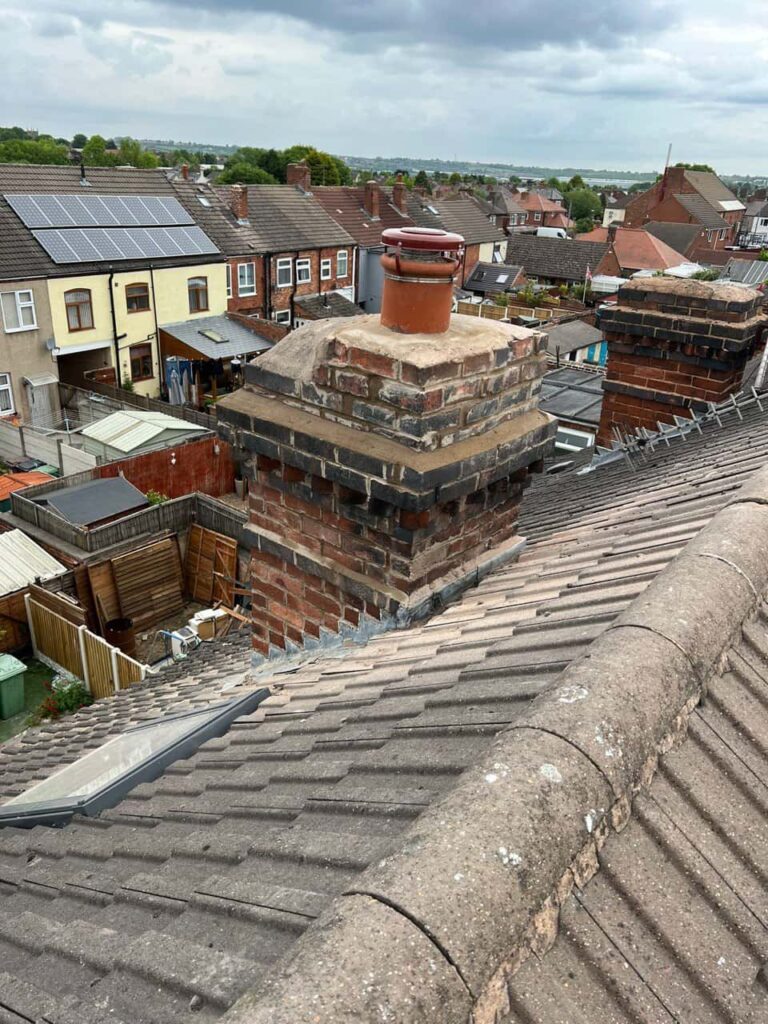
Lead flashing and other weatherproofing details protect the points where roof surfaces meet chimneys, walls, valleys and adjoining structures. These areas must accommodate water flow while maintaining a secure seal.
If flashing lifts, splits or becomes displaced, moisture can enter through a relatively small opening. Because junctions direct significant amounts of rainwater, a minor defect may produce recurring internal dampness.
Blocked or Defective Drainage Can Cause Water to Back Up
Gutters, valleys and other drainage channels are designed to move water away from the roof. When they become blocked, damaged or poorly aligned, water may collect in places that are not intended to remain wet.
This can allow moisture to reach beneath roof coverings or affect adjoining materials. A ceiling stain near an external wall or roof valley may therefore be related to a drainage problem rather than damage to the main roof surface.
Flat Roof Defects May Produce Localised Marks
Rooms beneath flat or low-pitched roofs can develop ceiling stains when the covering becomes cracked, blistered, split or separated around an edge or outlet.
Standing water can increase exposure at vulnerable points. The location of the internal mark may not match the damaged section because water can move beneath the covering before finding a route through the ceiling.
The Stain May Appear Only in Certain Weather
Some roof defects allow water through only when rain is driven from a particular direction or when rainfall is prolonged. A stain may therefore dry out and remain unchanged for weeks before returning.
This intermittent pattern can make the problem seem less urgent. In reality, repeated wetting may continue to affect insulation, timber and ceiling materials even when water is not visibly dripping.
Signs That the Stain Needs Prompt Investigation
A ceiling mark should be assessed when:
- It becomes darker during or after rainfall
- Its edges are gradually spreading
- The ceiling feels damp or soft
- Paint begins to bubble, peel or flake
- A musty smell develops in the room
- Similar marks appear nearby
- The stain returns after being redecorated
- Daylight or visible roof damage can be seen from the loft
- The ceiling begins to sag or bulge
A bulging ceiling or water close to electrical fittings should be treated with particular caution, and the affected area should be avoided until it has been assessed.
Why Painting Over the Stain Is Not a Solution
Redecorating may hide the discolouration temporarily, but it will not stop moisture from entering. If the underlying cause remains, the stain is likely to return and may become larger.
The source of the moisture should be identified and repaired first. The affected materials then need sufficient time to dry before any decorative work is considered.
What a Professional Roof Inspection Should Check
A roof inspection should examine the areas most likely to admit water, including:
- Tiles or slates around the suspected section
- Ridge and verge details
- Flashing around chimneys and walls
- Valleys and roof junctions
- Gutters and drainage outlets
- Flat-roof edges, seams and penetrations
- Underlay, battens and accessible roof timbers
- Damp insulation or staining within the loft
Considering both the exterior and accessible internal roof space provides a clearer understanding of the defect.
Early Repairs Can Keep the Problem Localised
When a small defect is identified promptly, repairs may remain limited to the affected part of the roof. Delaying investigation gives water more time to reach surrounding battens, insulation, timber and ceiling finishes.
A dry spell should not be taken as proof that the problem has resolved. Roof leaks often stop temporarily when the weather changes, only to return during the next period of suitable rainfall.
Conclusion
A small ceiling stain can be an early sign that a roof needs repairing, particularly when it appears after rain, grows over time or repeatedly returns. Because water can travel through the roof structure, the visible mark may be some distance from the actual defect.
Petersfield Roofing Repairs provides professional roof inspections and repairs in Petersfield, Hampshire. If you have noticed a ceiling stain and are unsure where the moisture is coming from, contact our team to arrange an assessment and identify the appropriate next step.
Call us on: 01730 771 389
Click here to find out more about Petersfield Roofing Repairs
Click here to complete our contact form and see how we can help with your roofing needs.