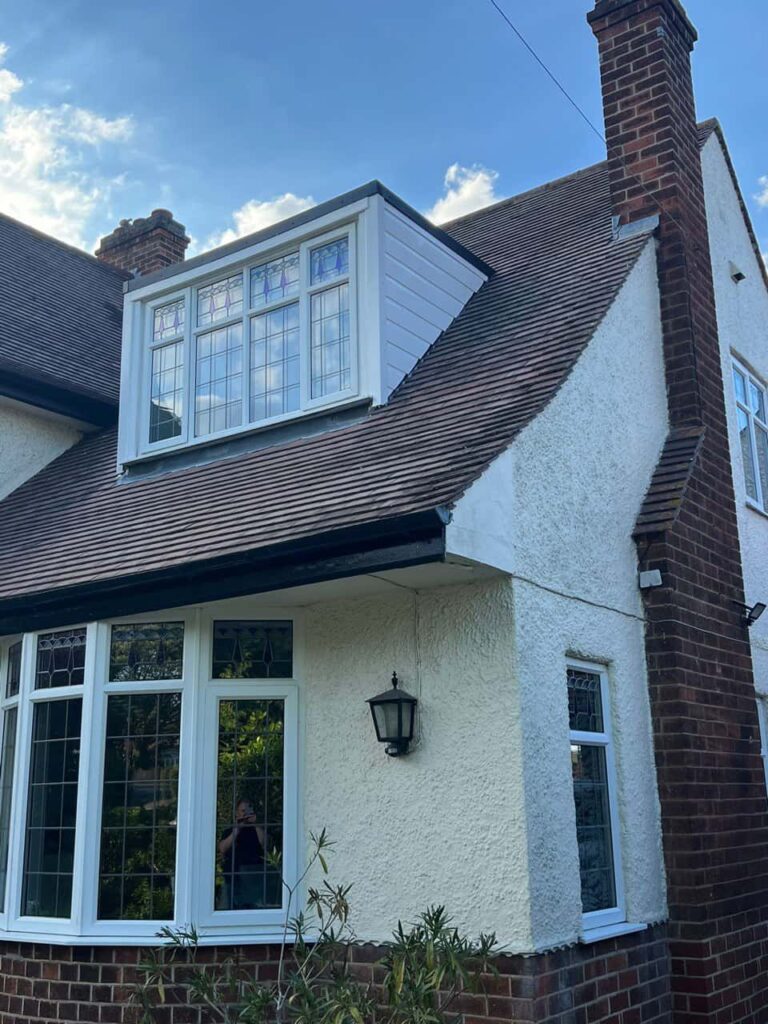
Prioritisation should begin with an inspection of the entire roof rather than a quick review of each defect in isolation. This helps determine whether one underlying problem is responsible for several symptoms and whether repairing one area first will protect the work completed elsewhere.
Address Immediate Safety Concerns
Loose tiles, unstable ridge materials and damaged sections around chimneys can create an immediate concern if parts are at risk of falling. These defects should receive prompt attention, particularly when they are positioned above entrances, paths or frequently used outdoor areas.
The affected section should also be examined for related weaknesses. One displaced tile may be isolated, but several loose materials can indicate deteriorated fixings, battens or mortar.
Stop Active Water Ingress
Once immediate safety concerns have been assessed, active leaks are normally a high priority. Continuing water entry can affect insulation, ceilings, plaster and roof timbers, allowing a localised defect to spread beneath the surface.
The visible damp patch should not be treated as the source automatically. Water may enter through damaged flashing, a valley, displaced tiles or defective underlay before travelling to another part of the property. Accurate leak detection is therefore essential before repairs begin.
Investigate Signs of Structural Movement
A sagging roofline, dipping surface or movement within the supporting materials requires careful assessment. These symptoms may indicate that moisture or deterioration has affected the roof deck, battens or structural timbers.
Surface repairs alone may not resolve this type of problem. The condition beneath the covering must be established so that any weakened support can be addressed before new tiles, slates or other materials are installed.
Protect Exposed Underlay and Battens
Missing or badly displaced tiles can expose the underlay to sunlight, wind and rain. Although underlay provides secondary protection, it is not intended to remain exposed for prolonged periods.
Where the underlay is torn, brittle or displaced, water may reach the battens and roof space. Protecting this area promptly can prevent a relatively contained defect from developing into a larger repair.
Check Flashing, Valleys and Roof Junctions
Roof junctions manage concentrated flows of water and are common sources of leakage. Damaged lead flashing, blocked valleys or failed seals around roof penetrations may therefore need to be prioritised even when the surrounding covering appears sound.
Repairing these details before replacing internal finishes or nearby roofing materials helps ensure that water is being directed correctly away from vulnerable areas.
Restore Effective Drainage
Gutters and other drainage routes help move rainwater away from the roof. Blockages, poor alignment or damaged components can cause water to overflow against the roof edge or collect where it should drain freely.
Drainage problems may also contribute to dampness around fascia boards and lower roofing materials. Restoring the intended flow of water can prevent repeated exposure while other repairs are planned.
Consider Which Problems Are Connected
Several faults may share one cause. A damaged valley can produce damp in more than one room, while weakened battens may allow several tiles to slip across the same roof slope.
Treating every symptom as an independent repair can result in unnecessary work or leave the original defect unresolved. A whole-roof inspection helps group related problems and establish a logical sequence.
Complete Foundational Repairs Before Surface Work
Repairs to supporting materials should normally be completed before the outer covering is restored. Installing new tiles over damaged battens or defective underlay will not provide a dependable result.
A sensible sequence may involve:
- identifying and stopping the source of water ingress;
- replacing damaged structural or supporting materials;
- repairing underlay and battens;
- restoring flashing, valleys and junctions;
- reinstalling the roof covering; and
- addressing internal finishes after the area has dried.
The exact order will depend on the roof’s design and condition, but each stage should support the next.
Prioritise Defects That Are Likely to Spread
Some problems remain stable for a period, while others can worsen whenever it rains or becomes windy. A small split in flashing, an opening around a displaced tile or a deteriorating roof edge may allow damage to extend beyond the original area.
Repairs that prevent further water entry or material movement should usually take priority over faults that are mainly cosmetic and not affecting performance.
Review Previous Repairs
If the roof has already received work in several areas, those repairs should be checked as part of the assessment. Repeated patches, incompatible materials or temporary sealants may conceal the true source of a leak.
A previous repair does not necessarily need to be removed, but it should be confirmed as secure and properly integrated with the surrounding roof. This avoids planning new work around a section that is already failing.
Separate Essential Repairs From Planned Maintenance
Not every issue requires the same urgency. Active leaks, loose materials and damaged supporting components should be distinguished from maintenance tasks that can be scheduled once the roof is secure.
This approach creates a clear order:
- urgent work protects people and prevents immediate damage;
- essential repairs restore weather resistance and structural reliability; and
- planned maintenance supports the roof’s longer-term performance.
Separating these categories helps ensure that the most important defects receive attention first.
Why a Written Repair Plan Is Useful
When several repairs are required, a clear plan should identify the cause, location, priority and sequence of each item. This makes it easier to understand which work is urgent and which tasks depend on earlier repairs being completed.
It also reduces the risk of disturbing newly repaired materials to reach another defect later. Coordinating related work can provide a more consistent and durable result across the roof.
Conclusion
Multiple roofing repairs should be prioritised according to safety, active water ingress, structural condition and the risk of damage spreading. The correct approach is not simply to repair the most visible problem first, but to understand how the roof’s components interact and complete the work in a logical order.
If your property in Petersfield, Hampshire, has several roofing defects, Petersfield Roofing Repairs can assess the complete roof and identify which areas require attention first. Contact us to arrange a professional inspection and receive clear guidance based on the roof’s actual condition.
Call us on: 01730 771 389
Click here to find out more about Petersfield Roofing Repairs
Click here to complete our contact form and see how we can help with your roofing needs.